The year 2025 brought major moments for the FreeSWITCH community, from product milestones to record engagement at ClueCon and real-world use cases shared by contributors around the globe. This 2025 Year in Review highlights key achievements, memorable events, and community contributions that shaped the past year.
2025 was a milestone year: FreeSWITCH officially turned 20!
Across two decades, it has grown from an ambitious open-source project into critical infrastructure for real-time communications around the world. This year’s updates, from community improvements to a landmark anniversary celebration, highlight what has always made FreeSWITCH endure: a global community of developers who build, scale, and maintain it in production.
Here’s a look back at FreeSWITCH’s 20th year and the moments that shaped it.
FreeSWITCH turns 20
What began in 2006 as a bold rethinking of how real-time communications software could be built has grown into a foundational platform used around the world in production systems. Two decades later, FreeSWITCH continues to power contact centers, enterprises, and all kinds of custom communications infrastructure.

The anniversary allowed us to look back, reflect, and recognize how far the ecosystem has come, and how the principles that shaped FreeSWITCH from the start still guide its evolution today.
Community updates: Making support more accessible
We started 2025 by investing in how the FreeSWITCH and SignalWire communities connect and collaborate.
One of the biggest changes was the move to Discord as the primary real-time support channel. This shift consolidated live technical discussions into a single place, making it easier for users to ask questions, share context, and get answers faster.
Alongside that, we introduced a new community forum within the SignalWire support portal. The goal was simple: make knowledge easier to find. By bringing community discussions closer to support workflows, solutions and insights are easier to search, reference, and build on over time.
These updates complement existing community touchpoints, including bimonthly public Office Hours and ClueCon, while laying a stronger foundation for ongoing collaboration.
Enterprise Connect 2025 recap
In March, the FreeSWITCH team headed to Enterprise Connect 2025 in Orlando, where conversations centered on modernizing communications stacks and reducing operational complexity.
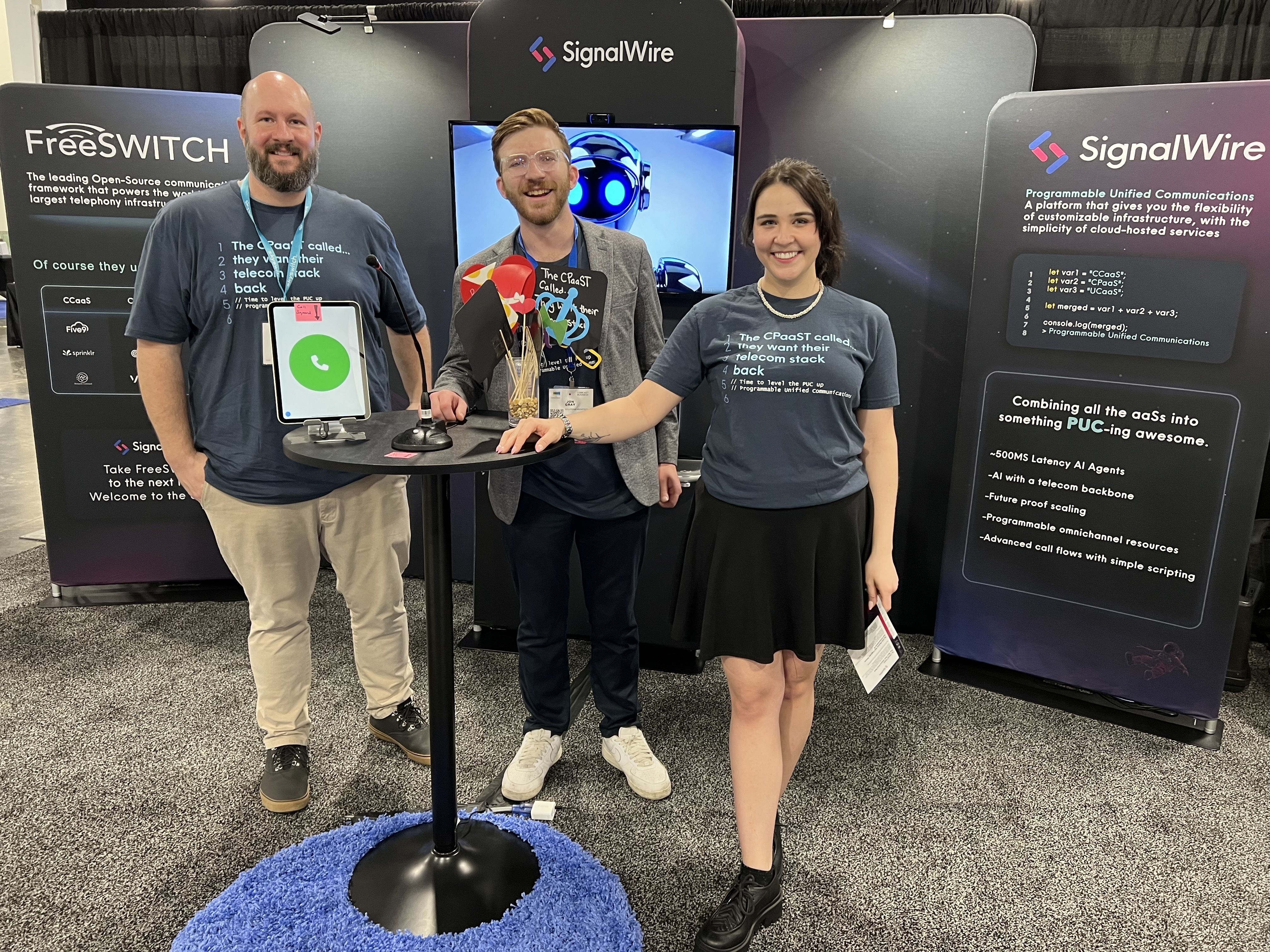
At the conference, we met with teams exploring how programmable infrastructure can support voice, messaging, and AI-driven experiences at scale. It was another reminder that many of the challenges enterprises face today are ones the FreeSWITCH community has been solving for years.
At booth #722, we showcased live, hands-on demos that highlighted how SignalWire’s Programmable Unified Communications (PUC) platform reduces latency, simplifies architecture, and gives teams far more control than traditional CPaaS approaches.
A standout experience at the booth was Sigmond, SignalWire’s context-aware AI agent. Built to demonstrate what low-latency, production-ready voice AI can achieve, Sigmond handled real, unscripted conversations over voice and video, answering questions about AI agents, PUC, and SignalWire’s platform in real time.
ClueCon 2025 highlights
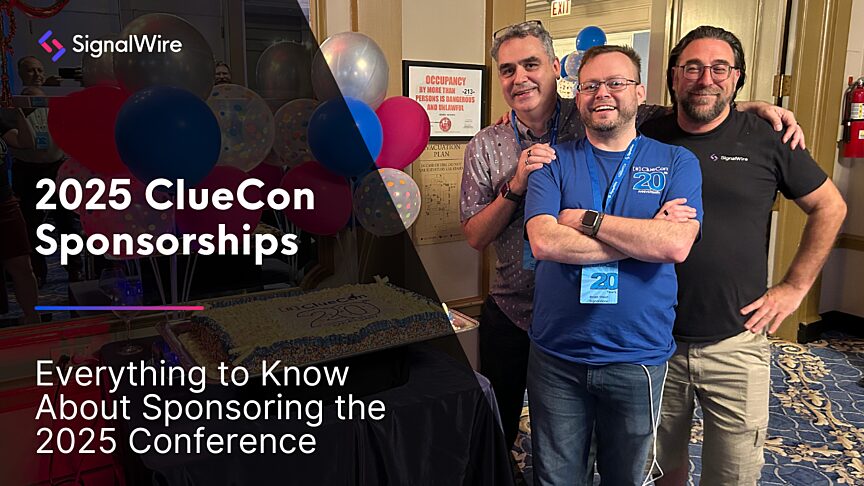
ClueCon 2025 marked a major milestone: the 20th anniversary of FreeSWITCH, and we celebrated those two decades of open-source excellence throughout the week.
Across four days of talks, ClueCon 2025 delivered a wide range of technical presentations, from deep dives into latency optimization and real-world AI deployments to updates from core open-source telecom projects. The week opened with a keynote from Anthony Minessale, reflecting on FreeSWITCH’s 20-year journey.
After traveling to Orlando for Enterprise Connect earlier in the year, Sigmond also made an appearance at ClueCon.

The 2025 conference was designed to reflect both FreeSWITCH’s history and its future. The schedule balanced hands-on building, technical sessions, and community traditions that have defined ClueCon for nearly two decades.
The Coder Games Hackathon
The Coder Games kicked things off on Monday. It was a full day dedicated to hands-on building, experimentation, and friendly competition. Seasoned telecom engineers and first-time hackers alike spent the day working solo or in teams to solve creative challenges that blended software, hardware, and real-time communications. The energy set the tone for the week: practical, playful, and deeply technical.
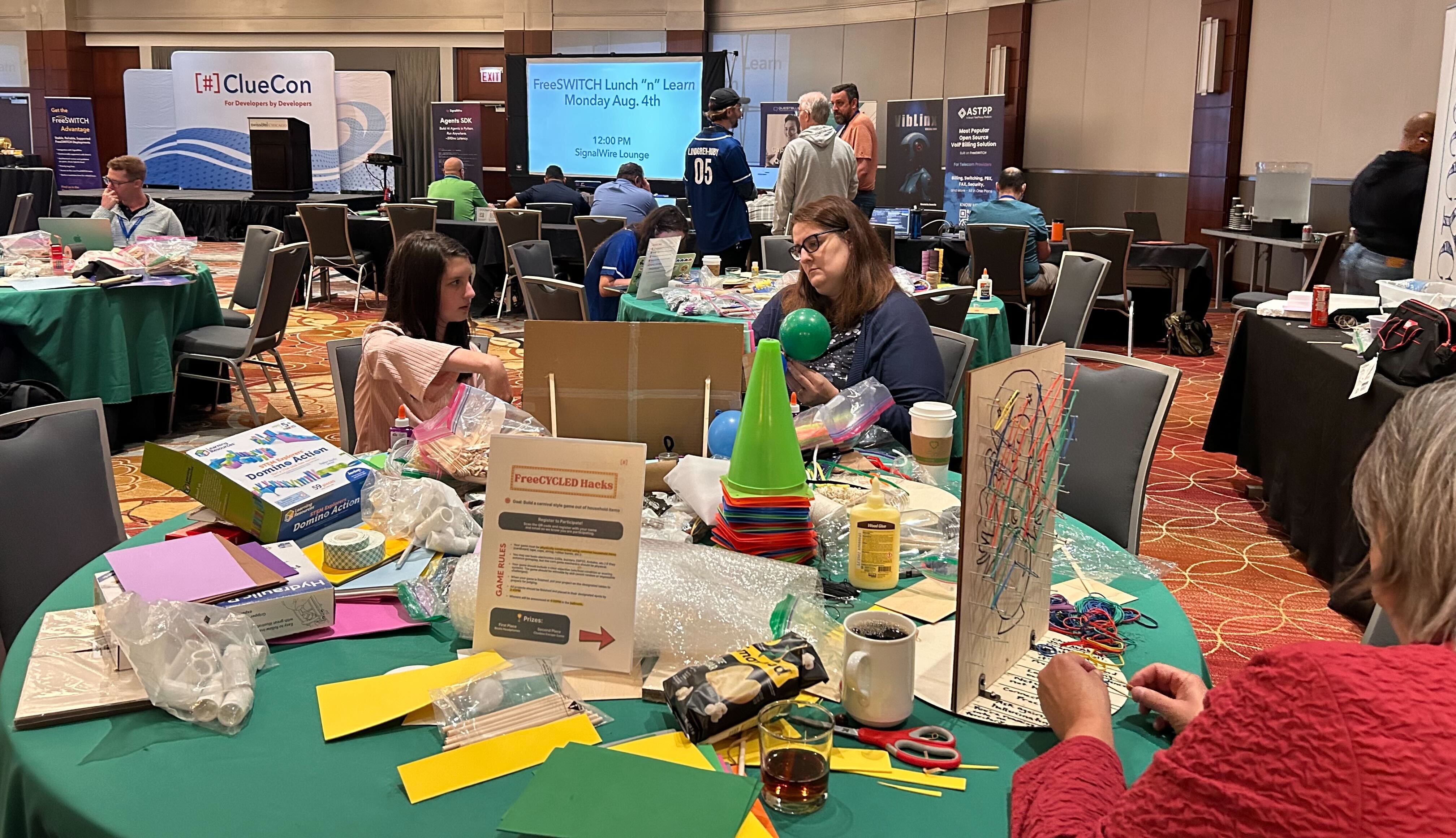
The Maker Challenge brought hardware into the mix, with participants building Arduino-powered devices that responded to live calls and SMS using SignalWire APIs. Meanwhile, FreeCYCLED Hacks pushed creativity even further, tasking teams with building working carnival games from everyday materials. This year’s crowd favorite was a fortune-telling machine that predicted attendees’ tech futures.
The evening wrapped with a welcome dinner at Giordano’s for classic Chicago deep dish pizza, giving everyone a chance to recharge and connect before the week ahead.
AI Roundtable
AI took center stage throughout ClueCon, but the AI Roundtable was where the most candid conversations happened. Industry leaders and builders spoke openly about what it actually takes to ship AI in live telecom environments, moving beyond hype to discuss latency constraints, hallucination prevention, conversational accuracy, and the operational realities of production deployments.
Rather than theoretical debates, the discussion focused on lessons learned from real systems in the field: where AI excels, where it breaks down, and how architecture decisions matter just as much as model choice. The roundtable reinforced a theme echoed across the conference, that AI works best when it’s tightly integrated with real-time communications infrastructure, not bolted on as an afterthought.
20th Birthday Celebration
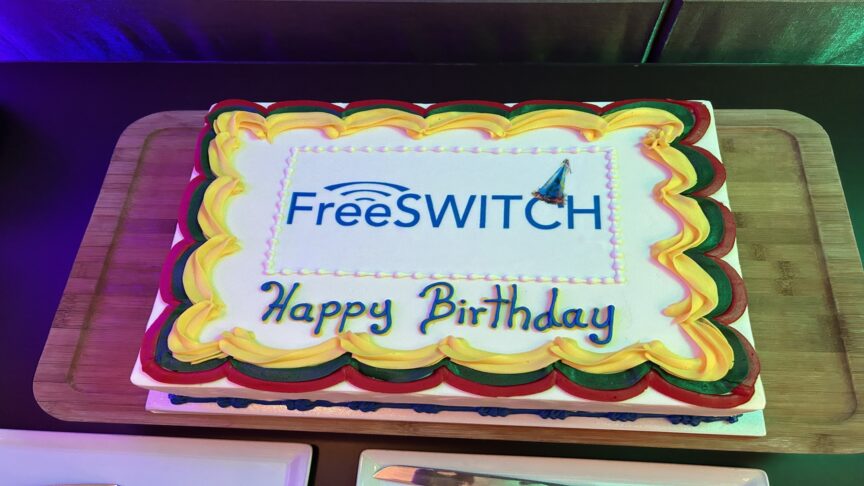
We even had a FreeSWITCH birthday party to celebrate two decades of telecom greatness.
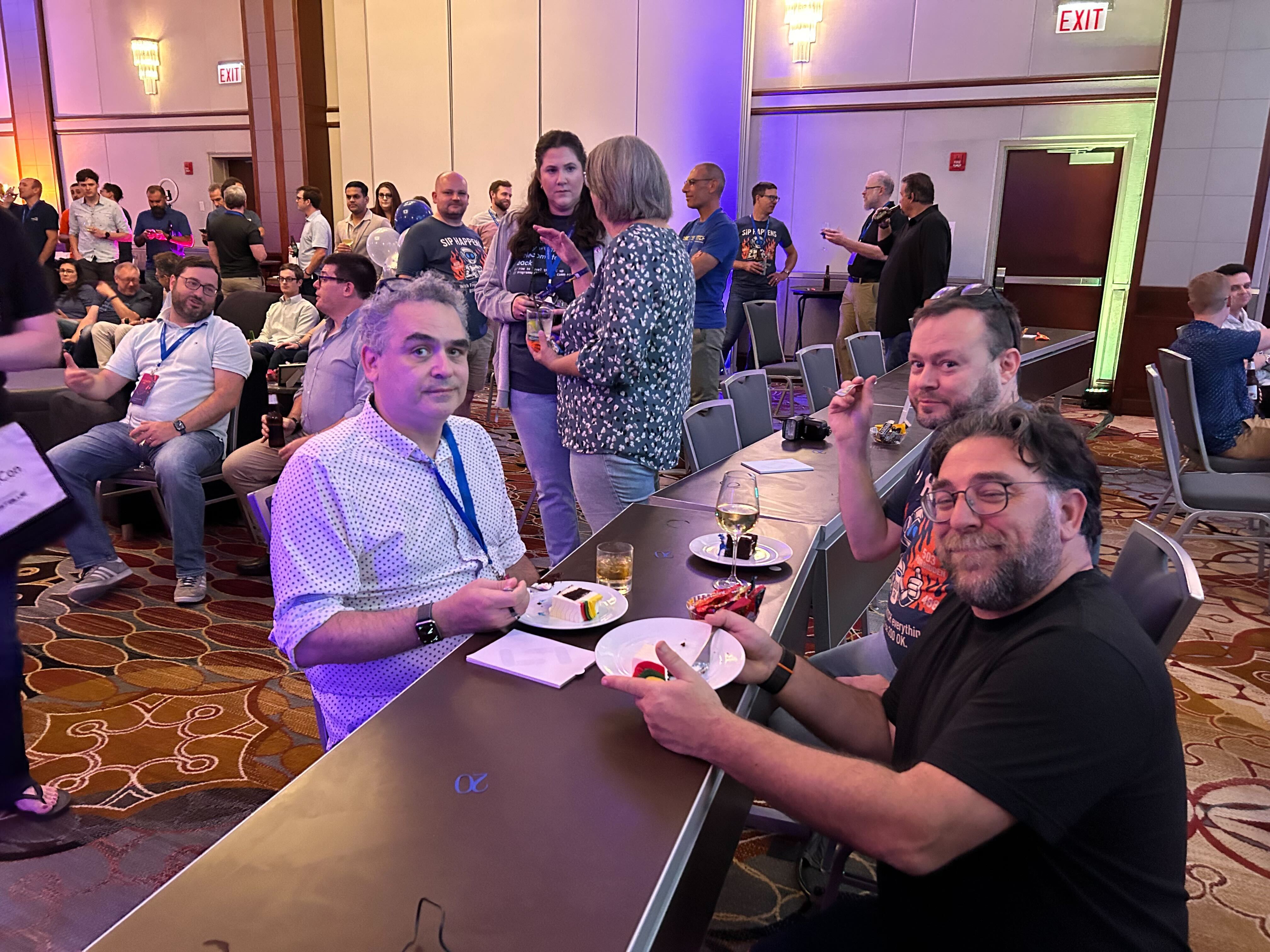
The anniversary celebration took place during the annual Gigabit Reception, complete with cake, drinks, hors d’oeuvres, and the always-popular live jam session. It was a moment to look back on two decades of open-source telecom innovation and appreciate the community that made it possible.
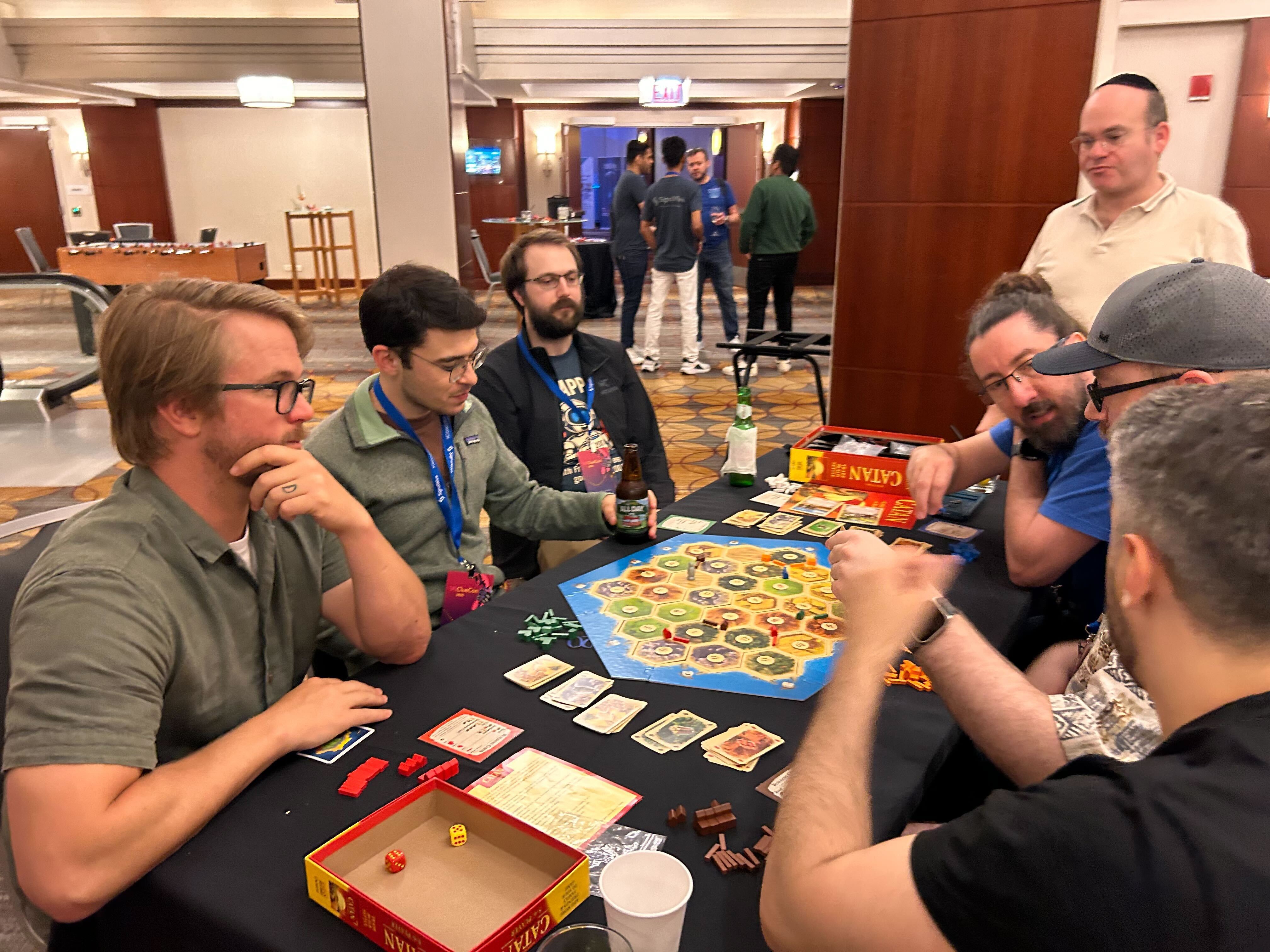
Networking continued each night of the week, with a game night for arcade competitions and board games, and the highly-anticipated ClueCon karaoke. These moments are a hallmark of ClueCon, creating space for real connections, spontaneous collaboration, and the kind of conversations that don’t happen in conference halls alone.
Dangerous Demos
The week closed with James Body’s Dangerous Demos competition, featuring rapid-fire presentations, unexpected moments, and just enough chaos to keep things interesting.
The stakes were as high as ever. Participants had just three minutes to demo something bold, ambitious, and very real, knowing it could either work flawlessly or fail spectacularly in front of a live audience.
Highlights ranged from a FreeSWITCH vs. Asterisk showdown to an AI agent belting out “Happy Birthday” to Anthony Minessale, perfectly capturing the spirit that defines the event.
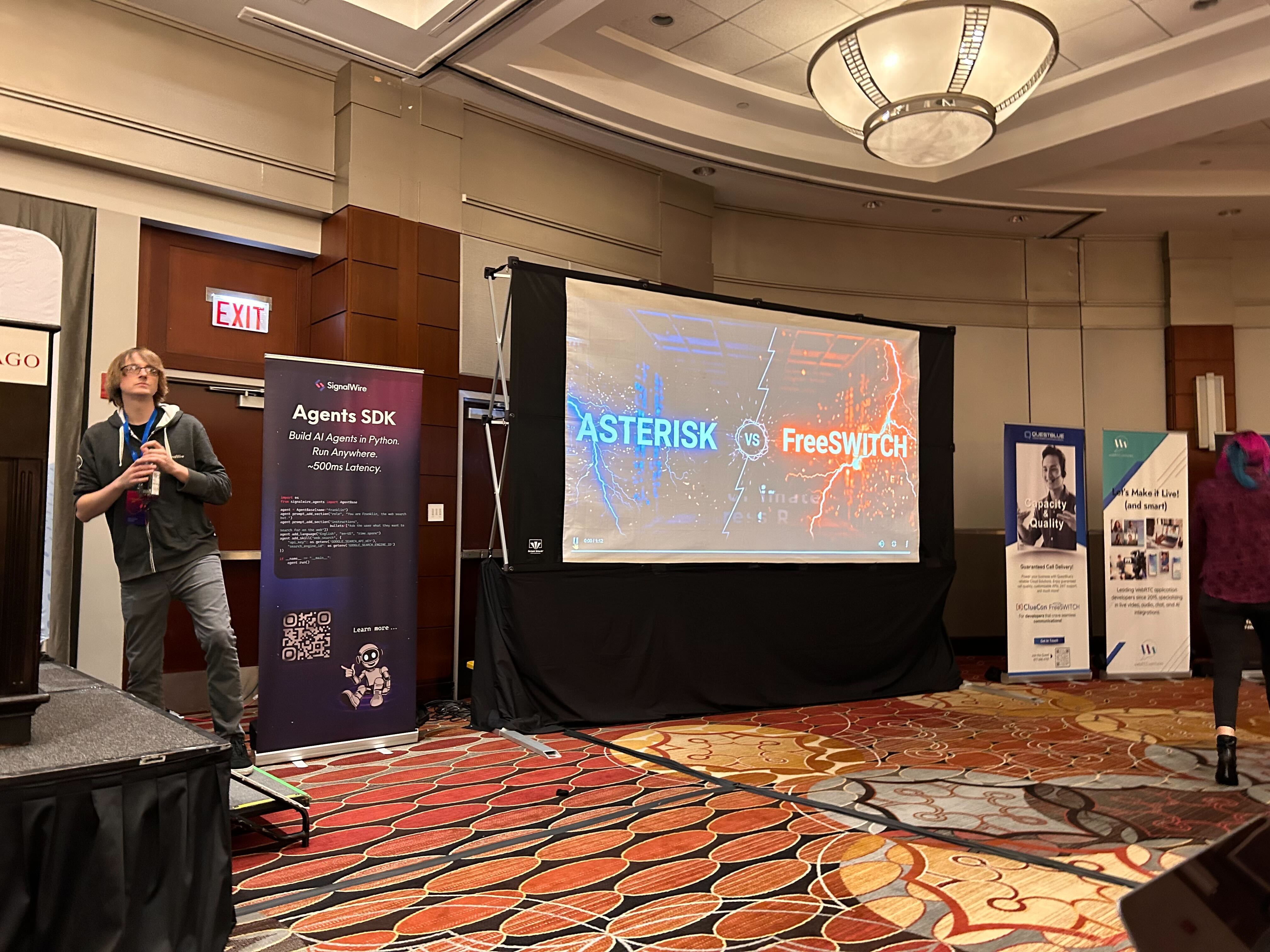
Dangerous Demos continues to be a ClueCon favorite because it strips away polish and slides, leaving only live systems, real code, and raw creativity. It’s where innovation is tested in public, and where some of the most memorable moments of the conference are born.
Anthony Minessale unveiled a fully voice-controlled virtual blackjack game built in under 700 lines of Python. The demo combines a real-time voice AI agent with a synchronized browser interface, allowing players to place bets, receive cards, and see outcomes update instantly, entirely through spoken interaction.
What makes the demo especially compelling is what it represents architecturally. Rather than relying on the AI model to manage memory, state, or flow, all game logic and state live in the application layer, with the AI acting as a stateless decision engine. The browser UI stays perfectly in sync with the voice experience through structured events, showing how real-time voice, visuals, and backend logic can be controlled within a single, tightly integrated system.
The demo serves as a practical blueprint for building production-ready AI voice applications, where state is predictable, latency is minimized, and UI and voice operate as one cohesive experience. It illustrates how Programmable Unified Communications enables developers to build sophisticated, interactive AI systems quickly, without stitching together fragile stacks of third-party services.
You can catch all the ClueCon videos on the FreeSWITCH YouTube channel.
Looking ahead: ClueCon 2026 has a home
Planning for the next chapter began almost immediately.
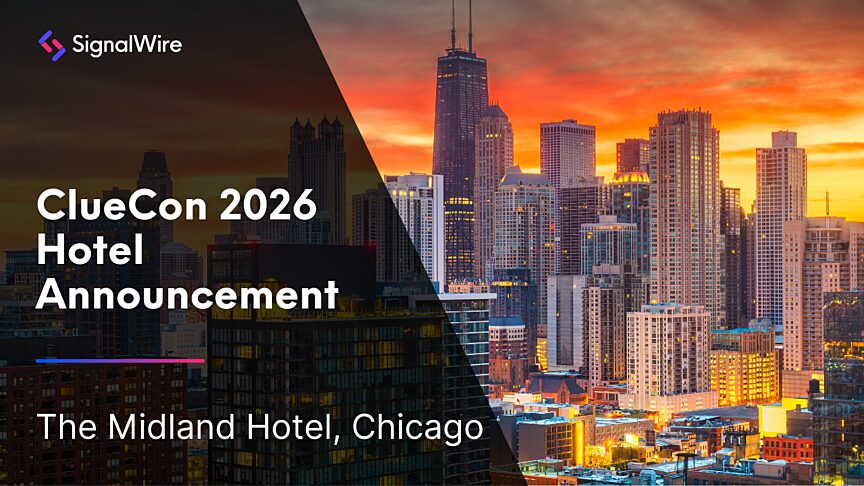
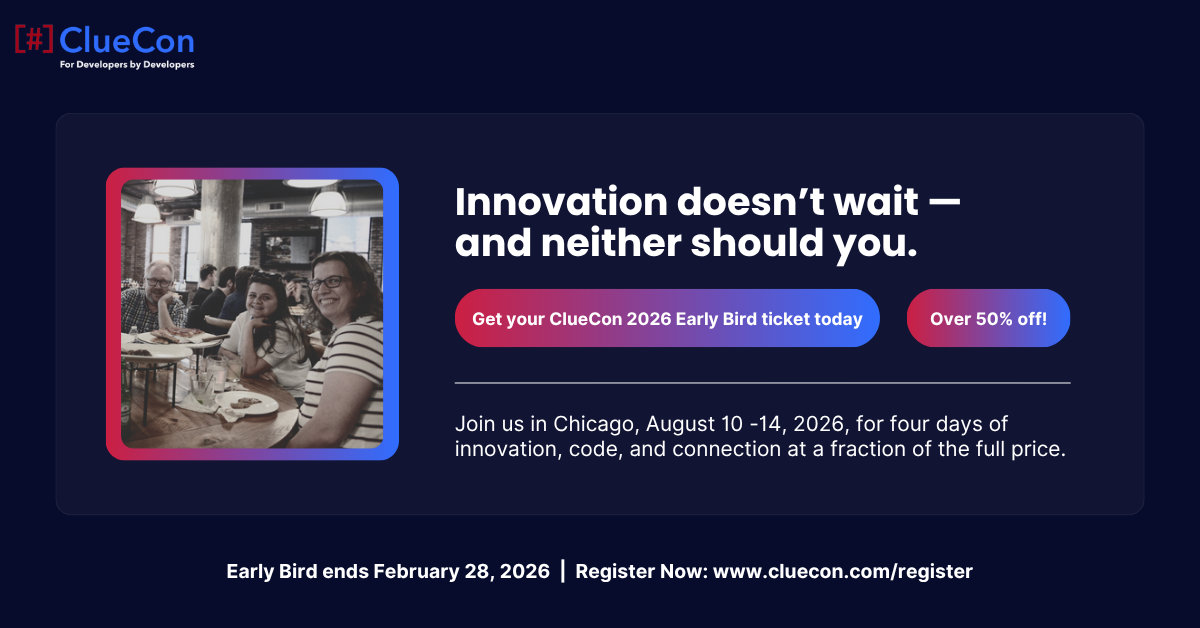
ClueCon 2026 is officially scheduled for August 10-14, and will take place at a new location: The Midland Hotel in Chicago!
Discounted registration for attendees staying in the ClueCon room block is still available, so take advantage of ClueCon’s early bird special and book your room ASAP to get the best deal possible. Tickets for ClueCon 2026 are 50% off through February! If you’re ready to join the fun next year, register now.
FreeSWITCH Advantage updates
2025 also included continued progress across FreeSWITCH and FreeSWITCH Advantage.
Throughout 2025, FreeSWITCH Advantage saw a steady cadence of quarterly releases focused on security hardening, platform stability, and long-term ecosystem support. Versions 20.25.1 through 20.25.4 collectively reinforced FSA’s role as a production-grade telecom foundation, with multiple critical upgrades.
These updates delivered important bug fixes and stability improvements, critical security fixes and further reliability enhancements. In addition to security and stability fixes, later releases introduced official support for Debian 13 (Trixie), ensuring FreeSWITCH Advantage remains aligned with modern Linux distributions and enterprise deployment requirements.
Thank you for being part of the community
If 2025 proved anything, it’s that FreeSWITCH remains a community of builders who continue to push real-time communications forward.
Whether you joined us on Discord, attended Office Hours, launched something new, or celebrated 20 years of FreeSWITCH at ClueCon, we want to thank you for being part of the journey and the community.
We’re looking forward to what we’ll build together next.
See you next year!