
Subscribe
Tags
Voice AI
AI Agents
Developer Tutorials
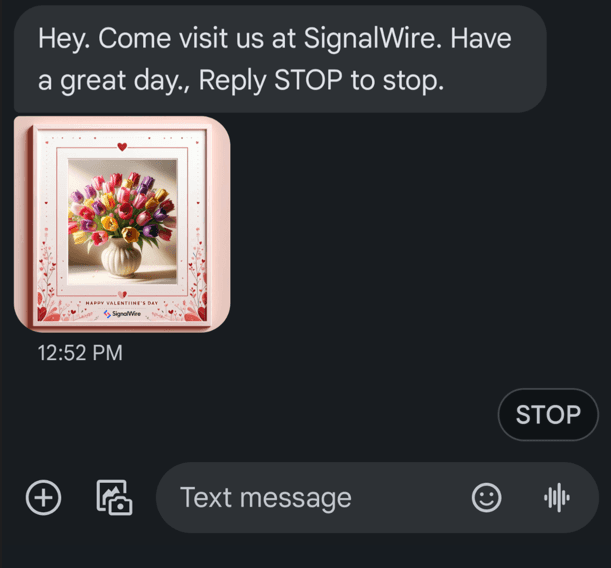
Flo’s Flowers is a demo that shows how an AI voice agent can collect a caller’s intent and details, then deliver a rich follow-up over Short Message Service (SMS), in this case an e-card image and message. The walkthrough explains how to build the flow using SignalWire AI Agent and SignalWire Markup Language (SWML), then points a SignalWire phone number to the SWML bin so callers can trigger the experience by phone. It also introduces a more advanced version that uses SignalWire AI Gateway (SWAIG) with DALL-E 3 to generate personalized flower images, which generalizes to many voice-to-SMS workflows beyond virtual flowers.
Build a Voice-to-SMS Workflow with SignalWire AI Agent
Flo’s Flowers demonstrates this voice-to-SMS handoff in a simple way: voice is used for the interaction, SMS is used for durable delivery.
SignalWire AI Agent, SignalWire Markup Language (SWML), and SignalWire AI Gateway (SWAIG) combine to turn a phone call into an automated workflow. In the basic example, the agent routes the conversation and triggers an SMS with the selected e-card. In the advanced version, the caller’s request becomes an input that can generate a personalized asset, then deliver it immediately, which is the same architecture you would use for customer support follow-ups, lead capture, appointment workflows, and outbound confirmations.
Introducing Flo's Flowers
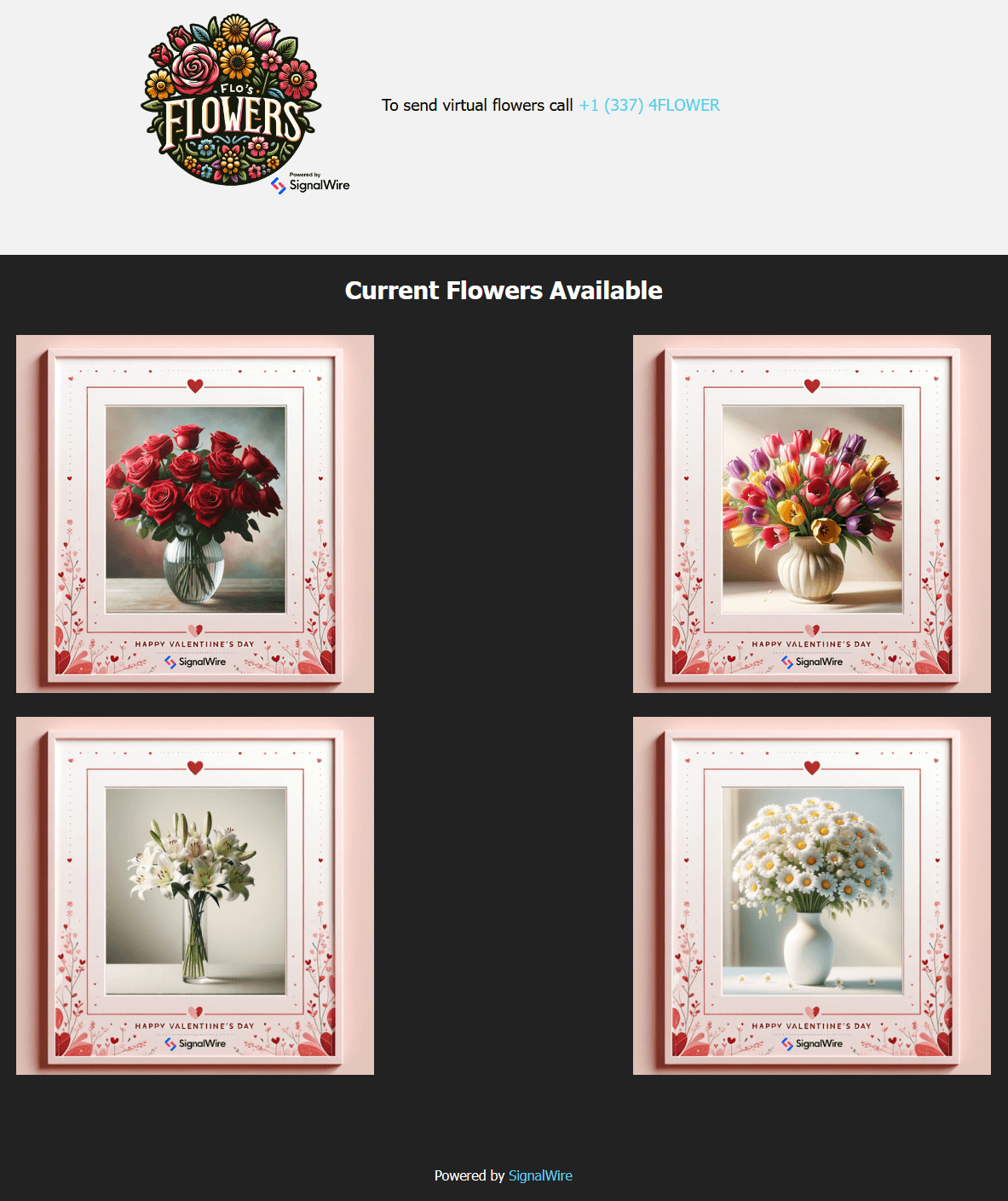
Forgot to get your valentine flowers this year? With Flo’s Flowers, you can send a beautiful e-card image of flowers along with a heartfelt text message to brighten someone's day, all with a simple phone call.
With a live demo available at +1 (337) 4FLOWER, you can send digital flowers and see the magic of SignalWire's AI Agent at work. And in this post, we’ll go over how to build your own version of this e-flower shop.
About SignalWire AI Agent
Flo's Flowers uses an AI agent to provide a digital option for sending flowers, combining the traditional sentiment of floral arrangements with the convenience of modern communication.
SignalWire AI Agent is a powerful tool for creating AI voice applications such as virtual assistants and other digital employees. An AI voice agent can be designed with our low-code builder, or it can be built from the ground up using SignalWire Markup Language (SWML) or Python.
How to create your own e-flower shop
Building your own version of Flo's Flowers only takes three steps:
1. Create a SWML Bin by copying the provided SWML.json example and creating a new bin in your SignalWire Space.
2. Within the file, update the necessary change-me sections and from_number. Customize the e-cards by updating the image URLs. Make sure the image file names correspond to the type of flowers they represent for a personalized touch.
This means that when replacing an image URL, the new image should be named to reflect the flower it depicts. For example, if you are updating the URL for an image of roses to oranges, the file should be named something like
to clearly indicate what the image represents.
3. Point a SignalWire phone number to the newly-created SWML bin, and you're ready to test out your flower shop! Call the designated number, and send digital flowers to your loved ones.
The result:
Flo's Flowers 2.0
The Flo's Flowers 2.0 example uses SignalWire's AI Gateway (SWAIG) and the creative power of OpenAI's DALL-E 3 to send personalized virtual flowers. This more advanced version of Flo's Flowers will allow you to generate an image of any type of flower.
Call +1(660)835-6937 to test it out for yourself!
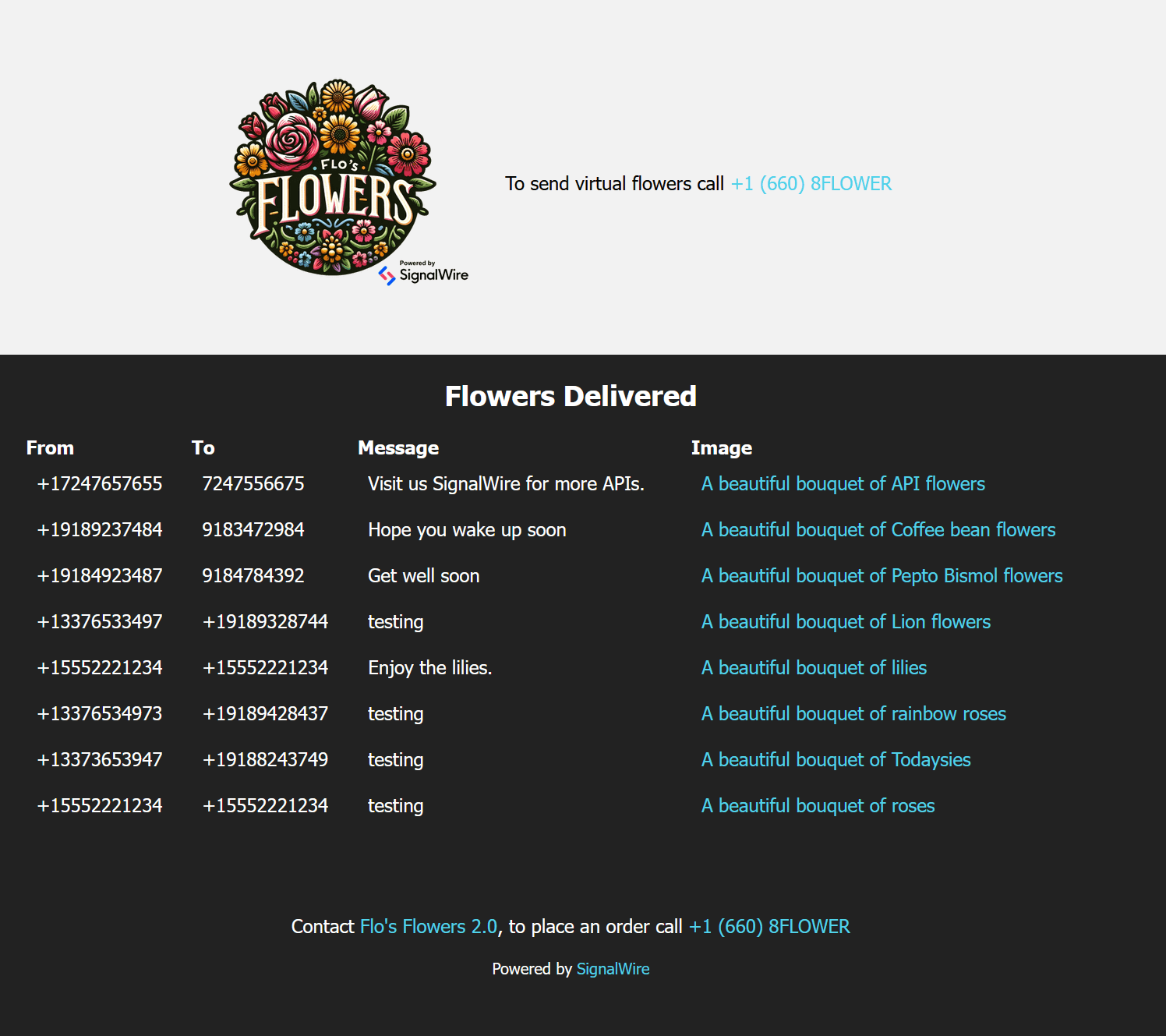
With the help of the GitHub repo and the video walkthrough below, you can build this more advanced version of Flo's Flowers using SWML:
With the power of AI behind it, this digital shop allows you to provide a personalized experience for both the flower sender and recipient. As an AI agent, Flo understands caller intent, retains context, and behaves in a way that feels human-like. Every interaction is designed to elevate the customer experience. Flo's Flowers is just one fun example of the possibilities offered by SignalWire AI Agent.
AI-powered experiences and digital employees
As businesses continue to embrace the power of AI and automation, the future of customer engagement is rapidly approaching. With tools like SignalWire's AI Agent, you can deliver efficient, intelligent, and personalized interactions that leave a lasting impression on customers.
The possibilities are endless when you harness the power of AI for your voice applications, whether you want to send digital flowers or provide real-time customer support. With SignalWire AI Agent, you can easily bring your AI ideas to life.
Start building your own digital employee today with SignalWire AI Agent and elevate your customers’ experiences. Sign up for a SignalWire space for free to test out what you can do with your own AI agent.

How do you send an SMS from an AI voice agent during a live call?
Use an AI agent that can trigger a messaging action with explicit inputs, typically the destination phone number and the message body. Keep the send step gated behind confirmation so the agent does not text the wrong person.
What information should an AI voice agent gather before it sends an SMS?
Collect the recipient number, the caller’s intent, and the minimum details needed to create the follow-up, then restate the details and ask for confirmation before sending.
When is SMS better than reading information out loud on a call?
SMS is better when the follow-up needs to be saved, such as a link, a confirmation number, directions, step-by-step instructions, or a summary the caller can reference later.
How do you prevent duplicate or accidental SMS sends in an automated voice experience?
Use an idempotency key or a per-call “sent” flag, confirm intent before sending, and design the flow so retries do not re-send the same message unless explicitly requested.
What kinds of voice-to-SMS workflows are most useful in real products?
Common workflows include appointment confirmations and rescheduling links, customer support summaries with next steps, order and delivery updates, lead capture follow-ups, and verification steps that send a one-time link or code.
Related Resources