


Subscribe
Tags
Messaging (SMS/MMS/10DLC)
SMS marketing works when messages are permission-based, clearly branded, and sent with an intentional cadence that keeps opt-outs low and deliverability high. This guide covers practical SMS marketing best practices, including how to collect consent, identify your brand in every message, write clear and compliant calls to action, choose a sustainable send frequency, monitor opt-out and traffic patterns, and separate marketing traffic from service messaging like order confirmations and two-factor authentication (2FA) codes. It also includes examples of promotional SMS flows and explains when Multimedia Messaging Service (MMS) is a better fit than text-only SMS.
The Advantages of SMS Marketing
Text messaging (SMS) is an essential tool for customer engagement, as it’s one of the most effective channels to reach your customers. With an average open rate of 98%, your message will be seen by as many eyes as possible when you incorporate an SMS marketing strategy into your company’s broader customer engagement strategy.
Thanks to these high open rates and billions of mobile users worldwide, SMS marketing all but guarantees that your message will be seen and acted upon. Skilled marketers know this – 60.5% of marketers use text messaging for higher customer engagement, and 53.5% use it for better open and click-through rates that quickly lead to conversions.
If done correctly, SMS marketing can quickly become the most effective piece of your marketing toolkit. In this post, we’ll go over our SMS marketing tips and tricks to get the most out of your SMS marketing campaigns, including some expertise on rules and regulations you should know to get your messages out the door as quickly as possible.
Best practices for SMS marketing campaigns
Messaging consent
Obtaining proper consent from your subscribers is not only a best practice, but a regulatory requirement. Direct, express consent is necessary for all marketing communications over SMS. Implementing a double opt-in process provides a timestamp and evidence of consent, which helps comply with regulations. This process also builds trust with your subscribers, as they have control over the messages they receive.
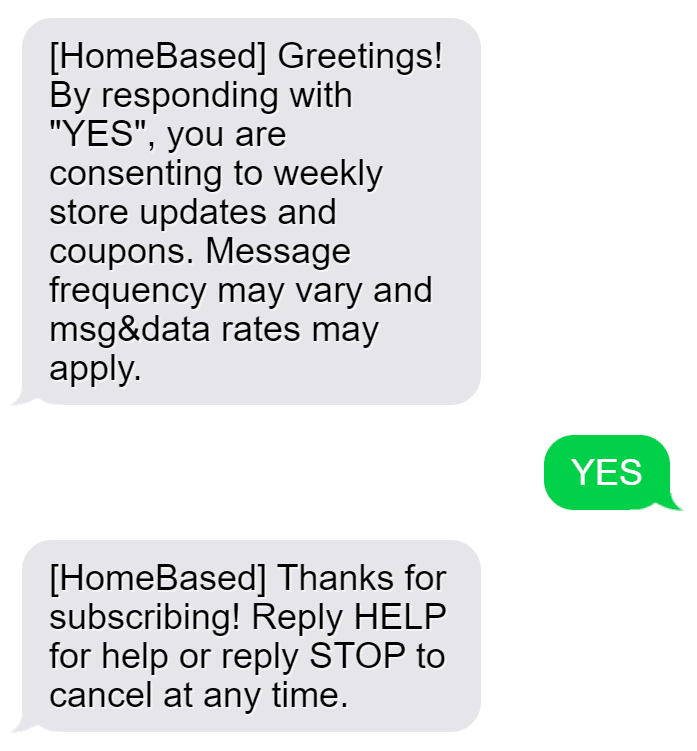
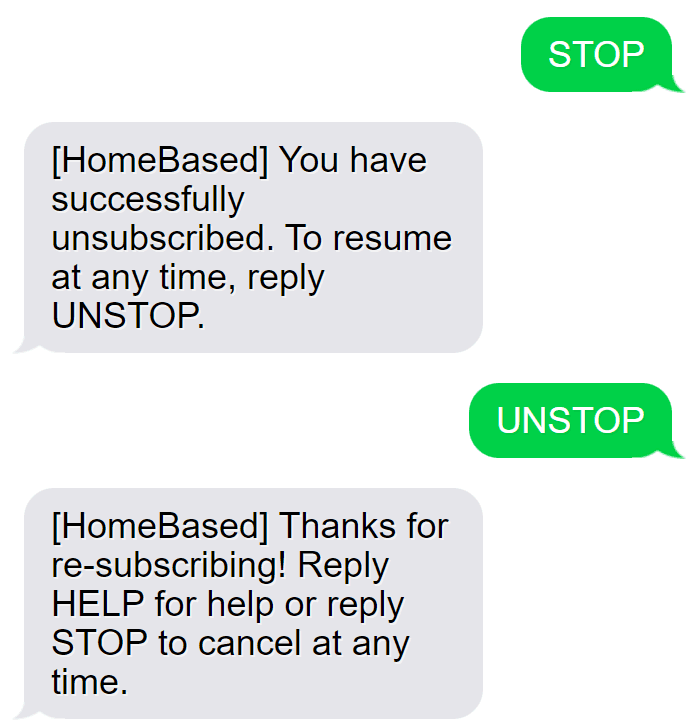
Upon confirmation, a follow-up message with options for help or canceling the subscription sets expectations, allowing users to opt-out at any time. However, if they do choose to opt out, you can also offer a keyword for them to opt back in.
Web forms are a popular method for subscriber opt-in. For example, to send promotional offers to customers who have made a purchase, you can ask them to sign up for exclusive deals by checking a box during the checkout phase of online shopping. The consumer can also initiate by texting a keyword to a specified number.
Identification
Your subscribers should always know who is sending them messages. This can be achieved by consistently using a recognizable sender ID and including your [brand name] in every message. Clear branding will help get higher engagement rates, as recipients are more likely to open messages from known senders.
Content purpose
Each message you send should have a clear objective. Whether you’re driving traffic to a website, promoting a sale, or sending reminders, clarity in purpose increases engagement. Define what you want to accomplish with each message. Are you aiming for the subscriber to visit a website, use a coupon code, or complete a purchase? Clear goals help in creating messages that are to-the-point and actionable.
Content quality
The quality of your content should be consistent. Make sure your messages are free from typos and grammatical errors. Use clear punctuation and a strong call-to-action. Professional messaging reflects well on your brand and increases the likelihood of recipient engagement. Well-written messages should appear concise and informative, providing value while being easy to understand.
Message cadence
Finding the right frequency for your messages is crucial so as not to annoy your customers. Sending marketing messages more than once a week can overwhelm your subscribers and lead to higher opt-out rates. Monitor your message frequency to strike a balance. Regular, but not excessive messaging keeps your audience engaged without feeling spammed.
Monitoring traffic patterns
Monitoring your traffic patterns helps in maintaining the effectiveness of your SMS marketing campaigns. Keep your opt-out percentage below 5%. A higher opt-out rate can indicate that your content is considered unwanted, risking message blockages and delivery issues by carriers. Regularly analyzing traffic patterns and engagement metrics ensures your messages are well-received.
Splitting service and marketing messages
Separating service messages from marketing messages enhances clarity and improves user experience. Service messages, such as order confirmations or two-factor authentication (2FA) codes, should remain distinct from promotional content. This separation prevents important information from being lost in the shuffle of marketing messages.
SMS marketing examples
SMS promo example
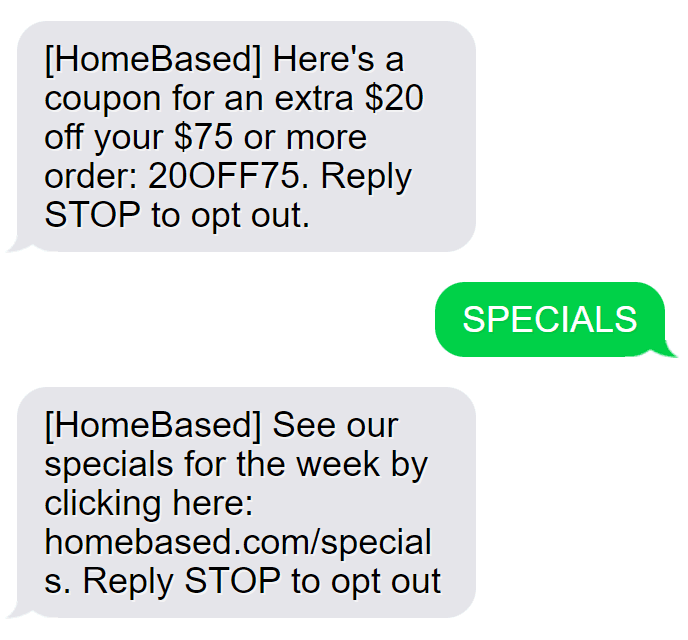
Once a customer opts into your campaign, you can offer them more keyword options to increase engagement. By using keywords to trigger specific events or responses, you create an interactive experience that encourages ongoing engagement and increases purchase options.
SMS marketing vs. MMS marketing
To send richer, more robust content with images, videos, and more characters, you will also need to add multimedia messaging (MMS) into your marketing strategy. For best results, use SMS for concise messages and MMS for more engaging content or to evoke a specific feeling.
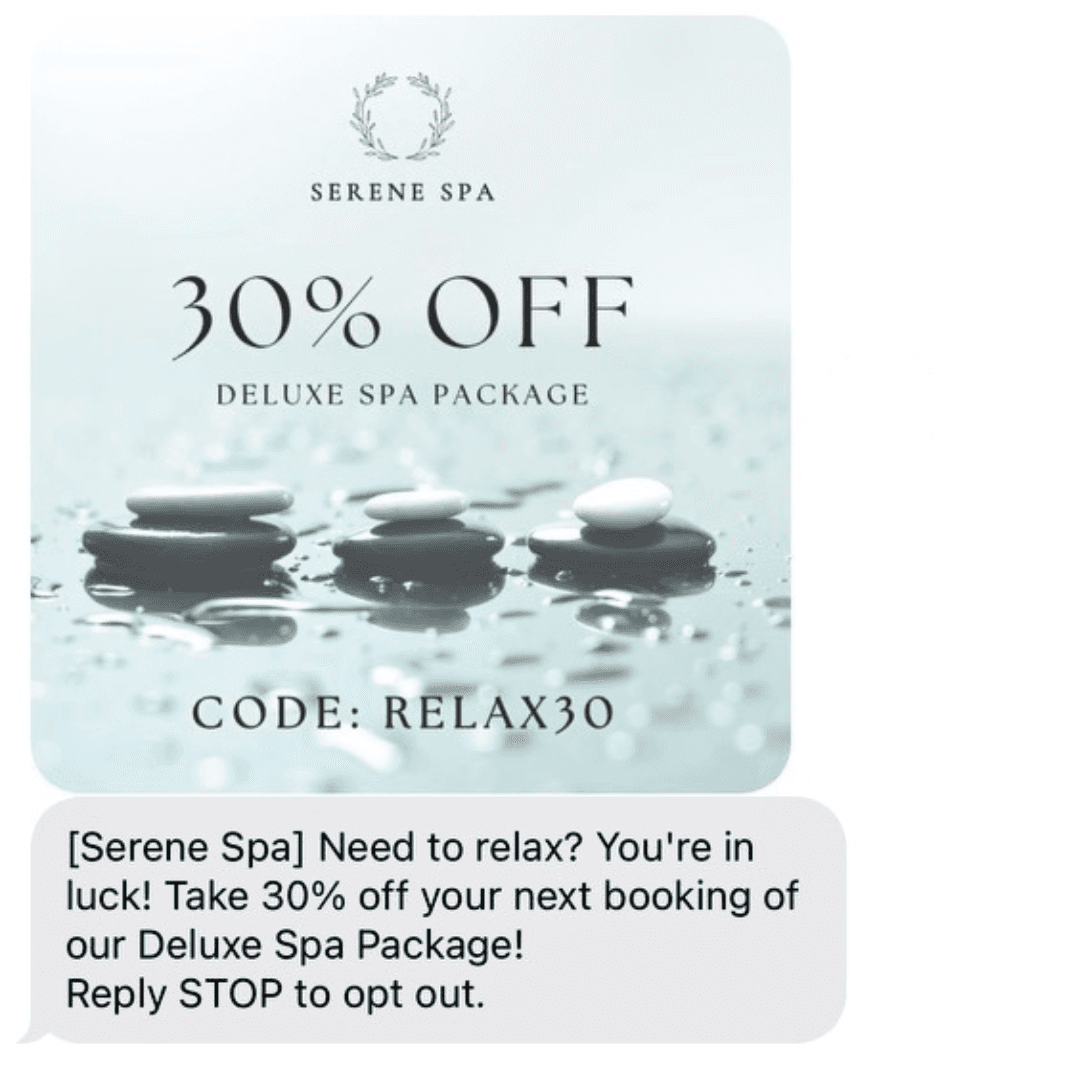
Sending MMS can cost more than SMS, however, typically MMS boasts a 20% higher campaign opt in-rate than SMS alone and a 15% click-through rate. Use your products and high-quality visuals to tell a story, create a mood, or grab attention. Otherwise, keep it simple with plain text SMS.
Start messaging with SignalWire
Once you have your messaging campaign planned, you’ll have to navigate the world of SMS compliance. SignalWire's experts continuously monitor and adhere to industry standards, helping our customers stay in line with the latest regulations. This proactive approach helps you stay ahead of anything that could impact the approval or deliverability of your campaigns.
Our compliance support extends to assisting customers with submitting brand guidelines or launching new 10DLC campaigns. We make sure you have everything you need to get registered through The Campaign Registry (TCR), significantly improving your chances of approval the first time. This saves you money by avoiding repeated submission fees and saves valuable time, allowing you to get your SMS campaigns up and running as quickly as possible.
Get started for free today by signing up for our Platform Free Trial. If you have other questions or issues, bring them to our community on Discord.

What is SMS marketing?
SMS marketing is the use of Short Message Service (SMS) text messages to send promotional offers, reminders, and other marketing communications to subscribers who have opted in.
What consent is required for SMS marketing messages?
Marketing messages require express consent from the recipient, and a double opt-in flow is commonly used to document consent and set expectations, including how to get help and how to opt out.
How often should you send SMS marketing messages?
Message cadence should be intentional, since sending too frequently can overwhelm subscribers and increase opt-outs. This guide recommends avoiding more than one marketing message per week as a general best practice, then monitoring engagement and opt-out patterns to tune frequency.
What opt-out rate should you target for SMS marketing?
A useful operational target is keeping opt-outs below 5%, since higher opt-out rates can signal unwanted messaging and increase the risk of deliverability problems.
When should you use MMS instead of SMS?
Use SMS for concise text updates, and use MMS when you need rich media or more expressive content. The post notes that MMS can cost more, but can improve engagement for promotions that benefit from visuals.
Related Resources


