Article
18 min
read
Switching to SignalWire for SMS: A Superior Twilio Alternative
Looking for an alternative to Twilio?

Dani Plicka
Content Marketing Manager


Choosing an SMS provider has long-term implications for cost, scalability, and how much control developers have over their messaging infrastructure. Twilio and SignalWire take very different approaches to SMS delivery, pricing, and platform design. This article explains how Twilio SMS and SignalWire SMS compare across architecture, developer flexibility, pricing models, and real-world use cases, helping teams decide which platform best fits their application and growth strategy.
How to switch from Twilio to SignalWire for SMS services
When it comes to SMS campaigns, the provider you choose to partner with can impact how quickly your campaigns get registered, the kind of support you can expect, and even throughput and deliverability. While Twilio has been a major player for messaging, SignalWire offers an alternative for SMS services with improved support, pricing, and industry expertise.
Making the switch to SignalWire can greatly improve your SMS campaigns, from A2P 10DLC registration to understanding The Campaign Registry (TCR). With a robust support system, unmatched compliance expertise, and advanced REST APIs that are designed to work with various systems, sending and receiving your messages will work even better than with your previous provider.
Cut SMS costs by 50%
SignalWire’s SMS rack rates are up to 50% lower than Twilio’s, making it one of the most cost-effective messaging platforms available. Whether you're sending thousands or millions of messages, those savings add up fast. And we don't compromise on throughput, deliverability, or support.
We built our platform from the ground up for elastic scaling, reliable delivery, and transparent pricing. You get direct-to-carrier routing, quick-turnaround message registration, and hands-on support at a fraction of the cost.
Unmatched support
If you’re finding your Twilio support lacking, look no further for experts who are always happy to help. No more slow response times or poor guidance. At SignalWire, we understand that timely and effective support is crucial for maintaining SMS operations (and all communications). That’s why we offer world-class, multi-level support, including:
General Support Team: Ready to tackle any immediate issues.
Customer Success Team: Guides you to get the most out of our services.
Carrier Operations: Provides deeper insights and messaging support, especially for A2P 10DLC registration and other compliance matters related to TCR.
With 24/7 support available across all levels, your queries and issues are resolved quickly, helping you maintain smooth and uninterrupted SMS operations.
Industry compliance experts
Navigating industry standards and compliance regulations can be daunting. SignalWire's carrier ops experts continuously monitor and adhere to industry standards, ensuring that our customers are always in line with the latest regulations. This proactive approach helps you avoid potential pitfalls and stay ahead of any upstream compliance changes that could impact your SMS campaigns.
Our compliance support extends to assisting customers with submitting brand guidelines or launching new SMS campaigns. We make sure you have everything you need to get registered through The Campaign Registry (TCR), significantly improving your chances of approval the first time. This saves you money by avoiding repeated submission fees and saves valuable time, allowing you to get your A2P 10DLC campaigns up and running as quickly as possible.
Priced to disrupt the market
At SignalWire, we’re dedicated to developing the world's most advanced cloud SMS platform. Our infinitely scaling elastic infrastructure supports robust messaging capabilities, so that you have access to the latest and most powerful tools for your SMS campaigns.
Don’t pay high mark-ups for basic SMS services. SignalWire disrupts standard models with competitive pricing, allowing you to allocate your resources towards developing innovative SMS solutions rather than overpaying for services.
Simplified migration with SignalWire's Compatibility REST API
SignalWire makes switching easy with our Compatibility REST API, which is designed to allow you to convert your existing Twilio projects to SignalWire with minimal effort.
Here’s how you can switch in two simple ways:
Transfer a TwiML bin to a CXML application
Access your existing TwiML bins in one browser tab.
In another tab, go to your SignalWire Dashboard, select your project, and navigate to the resources tab. Create a new resource by clicking +Add, then select CXML application.
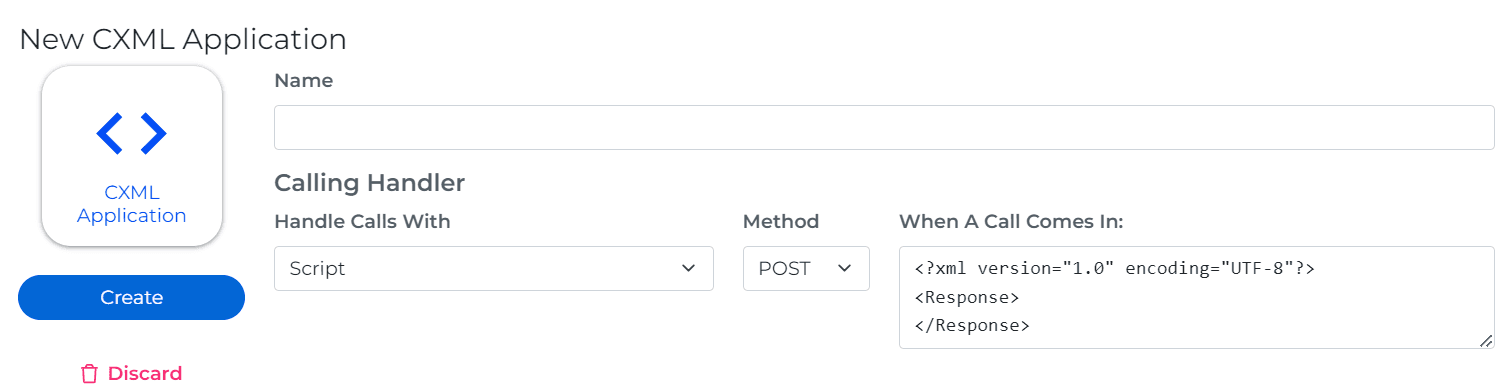
3. Copy the XML from your TwiML bin and paste it into the new CXML application. Name it appropriately.
4. Use the request URL from the new resource in your applications or specify it in the phone number settings for handling SMS.
Migrate TwiML apps to use the Compatibility REST API
Create a new token from your project’s API page in SignalWire.
Update your application with the new token, project key, and space URL. Refer to our Compatibility REST API documentation for language-specific instructions.
Modify your application accordingly, checking that all credentials and project names are updated. The application logic remains largely unchanged.
SignalWire’s Compatibility REST API is designed to make the migration process smooth and efficient. It enables easy management of all aspects of SMS functionality, including calls, conferences, messaging, and account maintenance. This API is built to be familiar to users of other platforms, making the transition easy to understand.
Features of the Compatibility REST API
SignalWire's Compatibility REST API allows you to manage and control both inbound and outbound calls and messages associated with your SignalWire phone numbers. This includes initiating, modifying, and terminating calls, as well as sending, receiving, and managing SMS messages.
Retrieve and update your account information easily. Access detailed logs and records, including the history of calls, messages, transcriptions, and media files. This allows for comprehensive tracking and analysis of communication activities.
Each "space" in SignalWire corresponds to a project or application and is assigned a unique subdomain. This feature helps in organizing and managing different environments or applications, making it easier to handle specific needs and configurations. Use HTTP Basic Authentication with your Project ID and Authentication Token for secure access, so that your API interactions are authenticated and secure.
Switch to SignalWire today and build with the best
Switching to SignalWire from Twilio will allow you to quickly upgrade to a system that offers better support, ensures compliance, and provides advanced SMS tools at a competitive price. With SignalWire, you can innovate without being bogged down by high costs or slowed down by poor support.
Make the switch today and experience the SignalWire difference in SMS communications! If you have questions or issues, you can join our community on Discord.
Frequently asked questions
What is the main difference between Twilio SMS and SignalWire SMS?
The main difference is architectural control. Twilio SMS is a fully managed communications platform with abstraction and bundled services, while SignalWire SMS provides lower-level access to messaging infrastructure, allowing developers to control routing, pricing strategy, and system behavior more directly.
Is Twilio or SignalWire better for high-volume SMS?
SignalWire is often a better fit for high-volume SMS use cases because it offers usage-based pricing without mandatory feature bundling, more transparent cost structure, and greater control over message routing and scaling behavior.
Does SignalWire support two-way SMS and MMS?
Yes. SignalWire supports two-way Short Message Service (SMS) and Multimedia Messaging Service (MMS), including long codes, toll-free numbers, and short code use cases, depending on configuration and carrier requirements.
Which platform is better for developers building custom messaging platforms?
SignalWire is better suited for developers building custom messaging platforms, software-as-a-service (SaaS) products, or communications-enabled applications that require predictable pricing, infrastructure transparency, and programmable control at scale.
Related Resources